

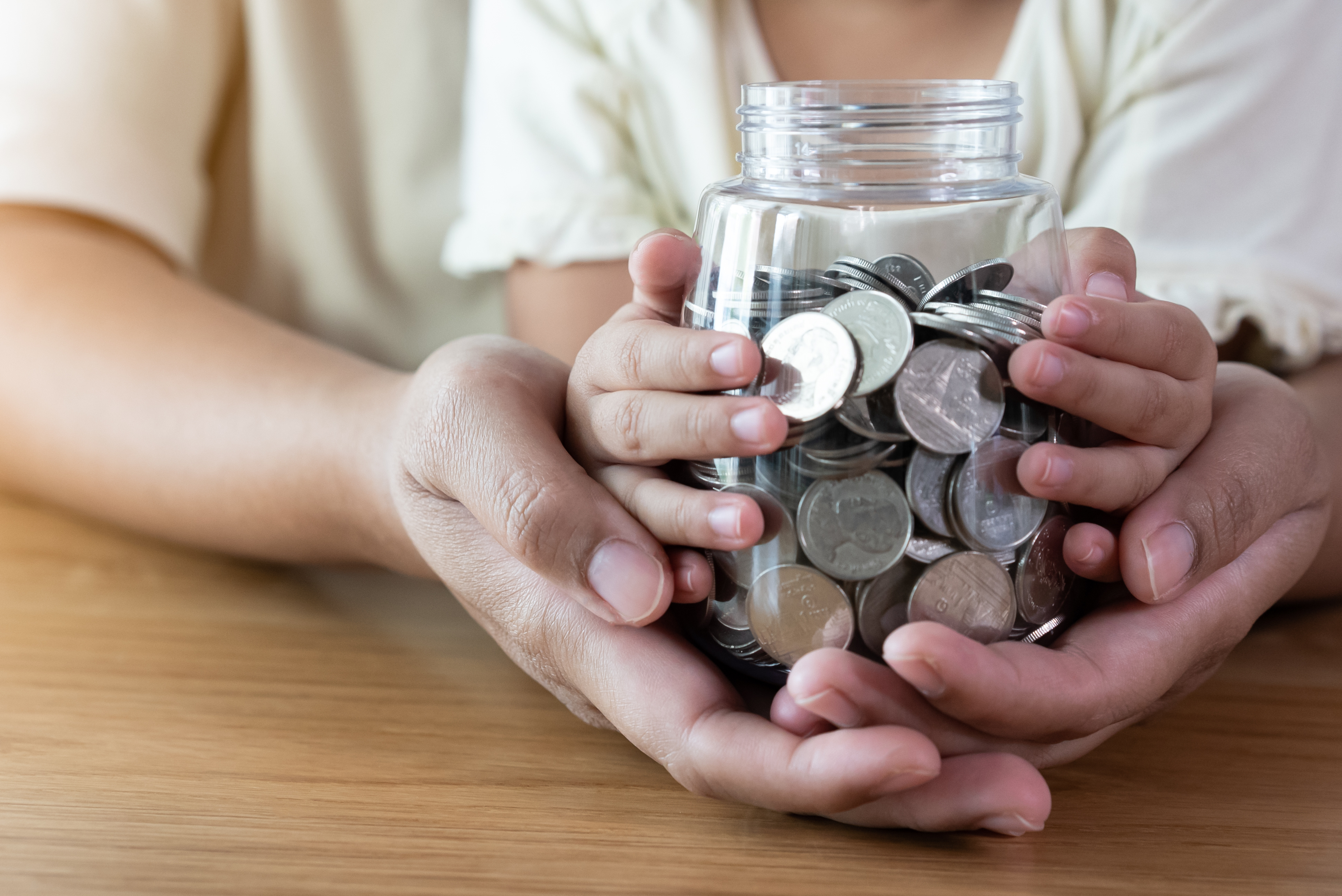
So much of our financial life now happens with a tap, swipe, or click. That can make teaching kids about money feel harder than it used to. Children may see parents pay for groceries, order school supplies, send money, or cover dinner without ever seeing cash change hands. That convenience is helpful, but it can also make money feel a little invisible.
Before kids are ready for mobile apps, debit cards, and digital wallets, it helps to start with something they can see and hold.
That’s where the three-jar method comes in.
With three simple jars labeled Spend, Save, and Share, kids can begin learning how money works at home. They can watch their money grow, make choices, and see the difference between using money now, setting it aside for later, and giving it to others.
At Pendleton Community Bank, we believe financial literacy for kids starts with everyday conversations at home and grows stronger with community support. PCB offers the PCB Cub Club Youth Savings account for students under 18 and proudly sponsors Monty’s Cub Club, a free WVU Tech campus initiative geared toward students 16 years of age and younger.
Here’s how each jar works.
Jar #1: The Spend Jar
The Spend jar is for small purchases your child can make now. That might be candy, stickers, a small toy, a snack after practice, or something fun at a school event.
This jar helps teach one of the most important money lessons kids need to learn: when the money is gone, it’s gone.

That may sound simple, but it is an important idea. Kids begin to understand that money has limits. If they spend everything today, they may not have enough for something they want tomorrow.
Parents can help by letting children make small choices with this jar. They may spend the whole amount on one item and regret it later. They may buy something that is fun for five minutes and forgotten by the next day. They may realize that several small purchases add up quickly.
That is all part of the lesson.
It is much better to learn those tradeoffs with a few dollars now than with much bigger financial decisions later. The Spend jar gives kids a safe place to practice making choices, thinking ahead, and learning from the results.
Jar #2: The Save Jar
The Save jar is for bigger goals.
For one child, that might be a LEGO set. For another, it might be a video game, a new bike, sports gear, art supplies, or spending money for an upcoming trip. The item matters less than the habit.
This jar teaches patience.
Instead of buying something the moment they want it, kids learn to set a goal and work toward it. You can help by writing the goal on the jar, adding a picture or marking progress as the money adds up.

That makes teaching kids about saving more concrete. They are not just hearing that saving is important. They are seeing it happen.
Once the Save jar reaches a certain amount, such as $25 or $50, it may be time for the next step: a trip to PCB.
A kids savings account can help children connect the jar at home with real banking habits. With a PCB Cub Club Youth Savings account, students can deposit money, watch their balance grow, and begin learning how a savings account works. It is a practical way to move from loose change and dollar bills to a more grown-up view of money.
Jar #3: The Share Jar
The Share jar teaches kids that money is not only for buying things. It can also be used to help other people.
Children can use this jar for donations, gifts, school fundraisers, church offerings, local causes, or community projects. They might support a food pantry, youth sports team, classroom fundraiser, animal shelter, or a neighbor going through a difficult time.
The lesson here is one of generosity.
For younger kids, this may be as simple as setting aside a few coins each week. Older kids may be ready for bigger conversations about causes they care about and how they want to help.

This is also a natural way to talk about community. Local schools, nonprofits, youth programs, and service organizations depend on people who are willing to give their time, money, and support.
PCB’s own community involvement reflects that same spirit. Through contributions, sponsorships, and volunteerism, PCB supports 350+ organizations and community efforts across the areas we serve. If your child is looking for Share jar ideas, our In the Community page can be a helpful place to learn about local causes making a difference close to home.
The Share jar helps children see that even a small amount can matter when it is given with care.
From Glass Jars to Digital Banking
The three-jar method works because it is easy to understand. Kids can see the money. They can count it. They can decide where it goes.
As they get older, those jars may begin to change.
The Spend jar may become everyday spending money. The Save jar may become a youth savings account. The Share jar may become a planned gift, donation, or regular habit of supporting local causes.
The jars may change over time, but the habits can continue.
A youth savings account can help kids take the next step. Instead of seeing money grow in a jar, they can see their balance grow in an account. They can learn what deposits are, how to review their balance, and why saving regularly matters.
The PCB Cub Club Youth Savings account can help families build those habits early. It also includes free digital banking when linked to a PCB deposit account, giving families another way to help children follow their savings progress.
For families looking for community banking in West Virginia and Virginia, PCB offers a practical next step from at-home money lessons to real savings experience.
Start With Three Labels
You do not need a complicated system to begin. Start with three jars and three labels: Spend, Save, and Share.
The next time your child receives allowance, birthday money, or chore money, help them divide it among the jars. Talk about what each jar is for. Ask what they want to save for. Let them choose a way to use the Share jar.
Some weeks will be neat and organized. Other weeks, the Spend jar may empty out faster than expected. That’s okay. Kids learn by making small decisions, talking through them, and trying again the next time money comes in.
Ready to get started? Download our free DIY jar labels and create your own Spend, Save, and Share jars at home.
When your child is ready to move from jars to a real savings account, visit your local PCB branch to open a PCB Cub Club Youth Savings account. Our friendly associates are here to help families across West Virginia and Virginia start good money habits early, from Franklin, Petersburg, Moorefield, Wardensville, and Marlinton to Beckley, Mount Hope, Oak Hill, Harrisonburg, Bridgewater, and Staunton.
At PCB, we believe local banking is about more than accounts. It’s about helping families, students, and communities build confidence with money in a place they already know and trust. Stop by your local branch or contact PCB to help your child take the next step.